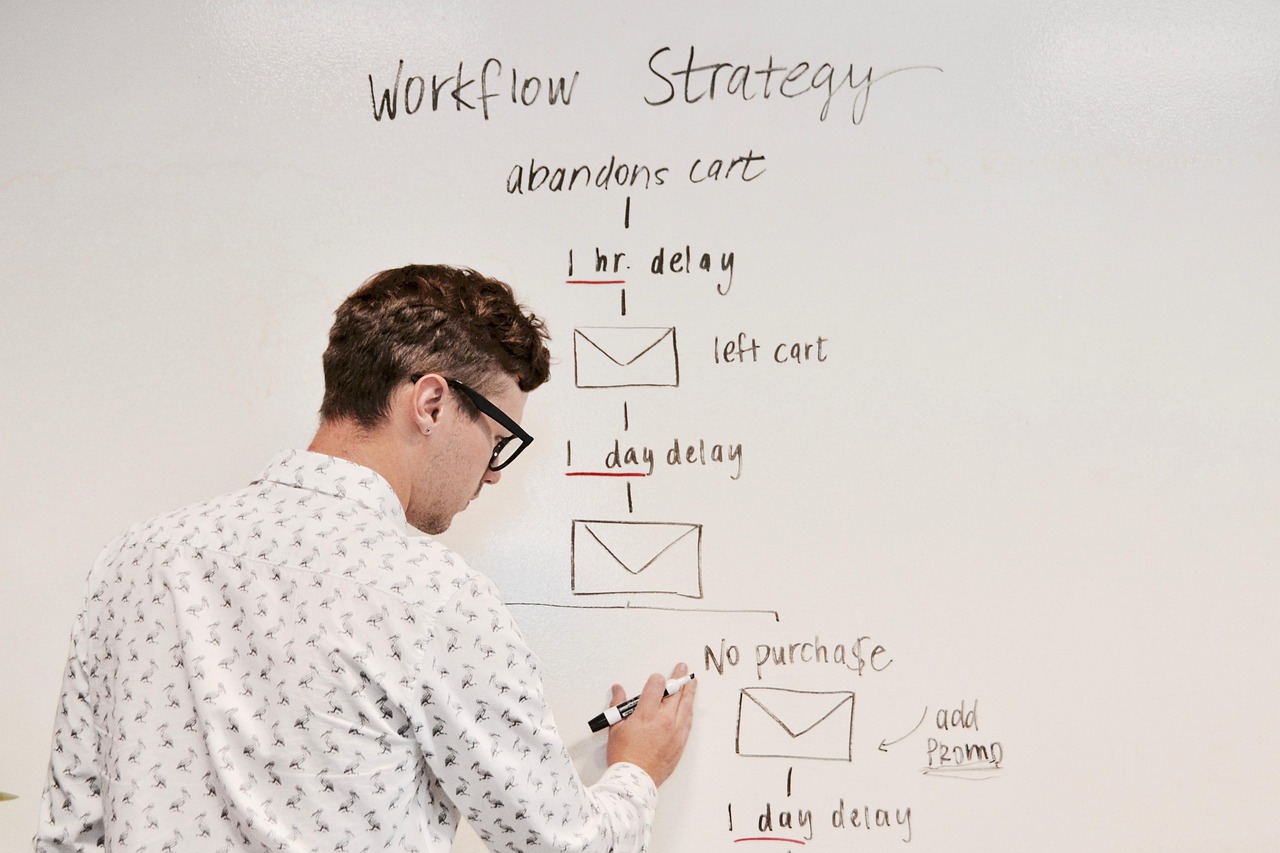
cost creator workflow automation
TL;DR
Creator operations burn through thousands in manual work—content prep, distribution, reporting—that should run automatically. Code-first workflow automation cuts these costs by 60-80% while eliminating human errors and scaling content operations without proportional headcount growth. [Start 14-day Free Trial — Automate a Workflow in 20 Minutes →]()
The Problem: Where Creator Workflows Bleed Money
Every successful creator operation runs on dozens of repetitive tasks that seem "quick" individually but compound into massive cost centers. Let's quantify what this actually costs your business.
The Hidden Labor Tax
Content preparation alone eats 8-12 hours weekly for most creator teams:
- Video processing: Transcription, thumbnail generation, metadata extraction (2-3 hours)
- Multi-platform distribution: Reformatting content for YouTube, TikTok, Instagram, Twitter (3-4 hours)
- SEO optimization: Title testing, description writing, tag research (2-3 hours)
- Performance reporting: Data collection, analysis, and stakeholder updates (2-3 hours)
At $30/hour (conservative for creator ops talent), this represents $240-360 weekly in pure labor costs—before accounting for errors, rework, or opportunity cost.
The Error Multiplier Effect
Manual workflows compound costs through mistakes:
- Publishing errors: Wrong thumbnails, broken links, missing CTAs cost 15-20% in potential revenue
- Scheduling conflicts: Double-booked content slots require emergency fixes
- Data inconsistencies: Mismatched analytics create bad strategic decisions
A single major publishing error can cost $2,000-5,000 in lost revenue for mid-size creators, while small errors accumulate to 10-15% revenue leakage monthly.
Real-World Cost Examples
Mid-size YouTube Channel (50K subscribers):
- Manual ops: 15 hours/week × $35/hour = $525/week = $27,300/year
- Error recovery: ~$8,000/year in lost revenue and rework
- Total annual cost: $35,300
Creator Startup (3-person team):
- Combined manual workflow time: 25 hours/week × $45/hour = $58,500/year
- Scaling bottleneck: Can't grow content volume without proportional hiring
- Opportunity cost: $100,000+ in delayed growth
Why Basic Tools Fail
Spreadsheets and point solutions create workflow fragmentation that actually increases costs over time.
The Integration Tax
Each new tool requires manual data bridging:
- Export from analytics platform → Transform in spreadsheet → Import to content calendar → Manual sync to distribution tools
- Average setup time per integration: 2-4 hours initially, 30-60 minutes weekly maintenance
- Breaking changes and API updates require constant re-work
Scaling Impossibility
Manual workflows hit hard limits:
- Linear scaling: Double content output = double manual work
- Knowledge bottlenecks: Complex workflows live in someone's head
- Quality degradation: Faster execution means more errors
Point tools optimize individual steps but create exponentially more connection work as you scale.
Solution Overview: Code-First Workflow Automation
A code-first automation tool treats your entire creator workflow as programmable infrastructure—not disconnected manual steps.
Core Capabilities
Trigger-based orchestration: Content upload automatically fires transcription, SEO optimization, multi-platform formatting, and scheduled distribution across channels.
API-native integration: Direct connections to YouTube, TikTok, Instagram, analytics platforms, and content management systems eliminate manual data movement.
Transform and validate: Automated content processing (resizing, reformatting, metadata generation) with built-in error checking and rollback capabilities.
Audit and monitor: Every workflow execution creates logs and metrics, making bottlenecks and failures immediately visible.
Business Impact
Instead of hiring additional ops staff to scale content volume, you deploy code that handles 80% of repetitive work while your team focuses on strategy, creative direction, and audience engagement.
Speed: Workflows that take hours manually complete in 5-15 minutes automatically. Consistency: Identical execution every time eliminates format errors and missed steps. Scalability: Handle 10x content volume with the same team size. Visibility: Real-time dashboards show exactly where time and money go.
Cost Comparison and ROI Model
Let's compare total cost of ownership for manual vs. automated creator operations.
Side-by-Side Annual Costs
| Cost Category | Manual Workflow | Automated Workflow | Savings |
|---|---|---|---|
| Labor (15 hrs/week) | $27,300 | $5,460 (2 hrs/week) | $21,840 |
| Error recovery | $8,000 | $800 | $7,200 |
| Tool costs | $3,600 | $4,800 | -$1,200 |
| Implementation | $0 | $2,000 | -$2,000 |
| Total Annual Cost | $38,900 | $13,060 | $25,840 |
ROI: 198% in year one, 430% in year two
ROI Calculator Template
Step 1: Calculate your current costs
- Weekly manual workflow hours: ___
- Average hourly rate: $___
- Annual labor cost: (hours × rate × 52) = $___
- Estimated annual error cost: $___
Step 2: Estimate automation savings
- Automated workflow time: ___ hours/week (typically 80-90% reduction)
- New annual labor cost: $___
- Reduced error cost: $___
- Tool cost: $4,800/year
- Implementation cost: $2,000 (one-time)
Step 3: Calculate payback
- Annual savings: $___
- Payback period: (Implementation cost ÷ Monthly savings) = ___ months
[Run Your Savings — Open ROI Calculator →]()
Worked Example: Content Creator with 100K Subscribers
Current state:
- 20 hours/week manual workflow at $40/hour = $41,600/year
- $12,000/year in error costs and missed opportunities
- Total: $53,600/year
Automated state:
- 3 hours/week workflow management = $6,240/year
- $1,200/year error costs (90% reduction)
- $4,800/year tool cost
- Total: $12,240/year
Result: $41,360 annual savings (77% cost reduction), 5.8-month payback
Implementation Playbook
Phase 1: Audit and Prioritize (Week 1)
• Map current workflows: Document every step from content creation to performance reporting • Time each process: Measure actual hours spent on repetitive tasks • Identify high-impact targets: Prioritize workflows that are frequent, time-consuming, and error-prone • Calculate baseline costs: Establish current labor and error costs for ROI measurement
Phase 2: Prototype Core Automation (Weeks 2-3)
• Start with highest-volume workflow: Usually content distribution or metadata processing • Build MVP automation: Focus on 80% of common cases, not edge cases • Test with subset of content: Run parallel to manual process initially • [Download Integration Checklist →]() for technical requirements
Phase 3: Pilot and Measure (Week 4-6)
• **Deploy automation for 30% of
Why This Topic Matters
If this is the part you are comparing right now, pricing creator workflow automation is worth opening next because it fills in a closely related category or tag perspective. People usually search for cost creator workflow automation when they want a practical answer they can apply quickly, not a broad theory dump. The most useful article is the one that clarifies the decision, shows a few realistic options, and helps the reader make the next move with less hesitation.

FAQ
What is the fastest way to approach cost creator workflow automation?
Start with the smallest version that solves one clear problem, then improve the offer or workflow after you see how people respond.
How detailed should the first version be for cost creator workflow automation?
Detailed enough to create a result, but not so broad that it becomes hard to maintain. A narrower first version usually converts better.
When should I connect cost creator workflow automation to an offer?
Usually after the reader understands the options and can see where the offer saves time, reduces confusion, or shortens setup.
Read Next
If you want the next decision to feel easier, these related posts usually work well together with the article above.
- cost ai content automation : it fills in a closely related category or tag perspective.
- automation digital product templates : it fills in a closely related category or tag perspective.
Next Step
If cost creator workflow automation is part of a repeated workflow, try attaching it to one small tool or script first. A narrow automation that works consistently is usually more valuable than a broad setup that stays half-finished.
Featured image sourced from Pixabay. Image by Campaign_Creators on Pixabay.
답글 남기기